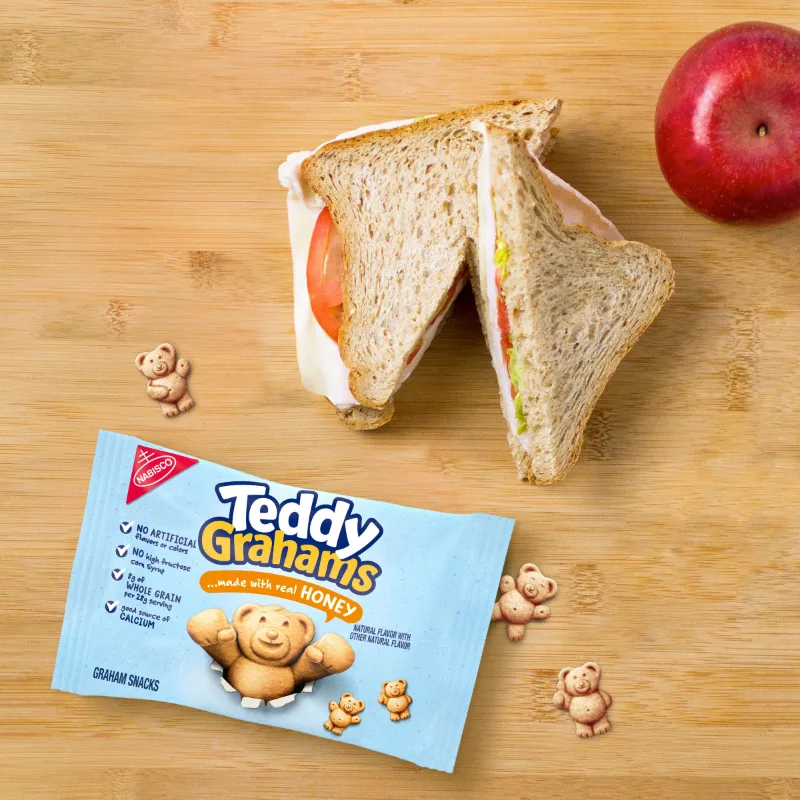
A pouch of Teddy Grahams and a handful poured from a box are the same bears. What differs is the wrapping, the measuring and the price, and only the last one shows up on your card statement. Below, every pack on sale answers one question: what does an ounce of grahams cost you here?
On price per ounce, the figures follow the full Teddy Grahams catalog we keep on the front page.
Why compare by the ounce
Pack sizes in this line run from a single 8 oz bag to a case of 150 pouches. A bigger number on the price tag tells you little until you divide it by the weight. Every pack on this site already shows that division under its price, and the table below puts them all in one place, cheapest ounce first.
Two patterns show up every time we update the table. Multi-box and multi-bag cases cluster at the cheap end. Pouches sit higher, because each ounce comes with its own wrapper, its own seal and the work of filling it. The variety boxes land wherever their mix puts them, and a part of what you pay for there is not bears at all.
How big a serving is
The federal guide to the Nutrition Facts label tells you to read the serving size and the number of servings first, before any other number. On a 10 oz box of Teddy Grahams the serving is 24 pieces, or 30 g, and the box holds about nine of them. A Honey snack pack is one 28 g serving on its own.
So a pouch is a little smaller than a box serving. If your child stops at a pouch, the box costs you slightly more food per sitting. If the bowl gets refilled, the pouch is doing you a favor by stopping the second handful.
When the pouch is worth it
A pouch earns its price in three places. The first is the school lunchbox, where an open box cannot go. The second is a shared table: a classroom party, a team snack or a car full of cousins, where portions matter more than pennies. The third is the household where the bowl never stops at one. In all three you are buying the portion as much as the grahams.
Everywhere else, a box poured into a reusable cup or a small container gives you the same snack for less. Ten small containers on a shelf turn a box into homemade snack packs in a couple of minutes on Sunday evening.
Big cases and the best-by date
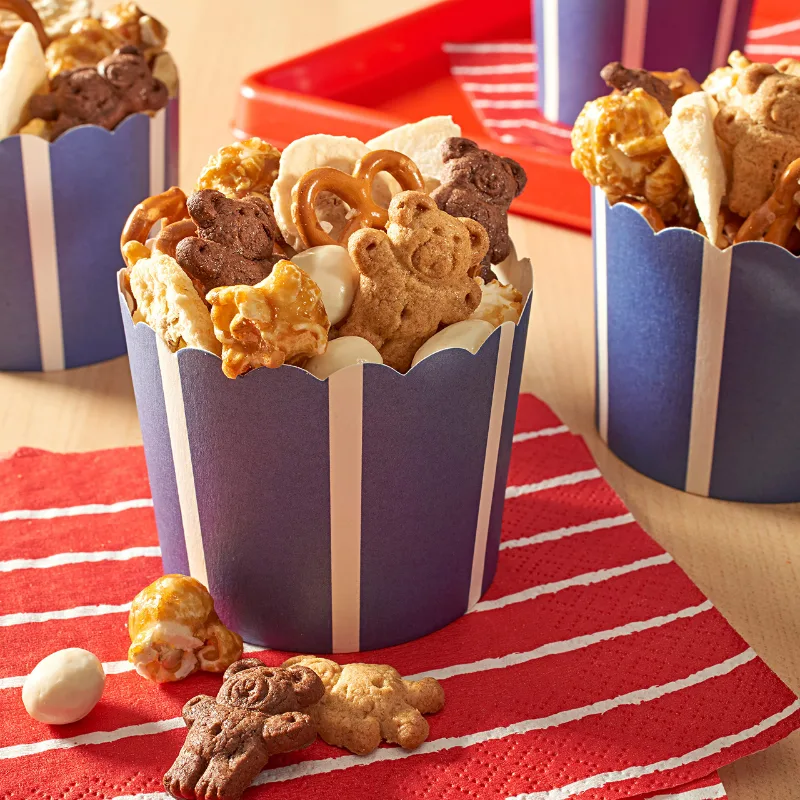
The cheapest ounce is the one that gets eaten. Before a large case, count how long it lasts in your house. At one serving a day, a six-box case of 10 oz boxes is about eight weeks of afternoons, and a 150-pouch case is about five months of one pouch a day. Check the best-by date printed on what arrives and keep the case in a cool, dry cupboard.
A quick way to decide
- One child, school lunches only: a ten-pouch box every two weeks, or a forty-pack every two months.
- After-school bowls at home: a box, poured into cups.
- A party or a team table: pouches, so every portion is the same.
- Variety wanted across the week: a Nabisco mixed box, knowing only part of it is Teddy Grahams.
Whatever you pick, the price per ounce on each card is the number to compare, and it changes as prices do. We update it on a schedule, so the order of the table above can shift between visits.